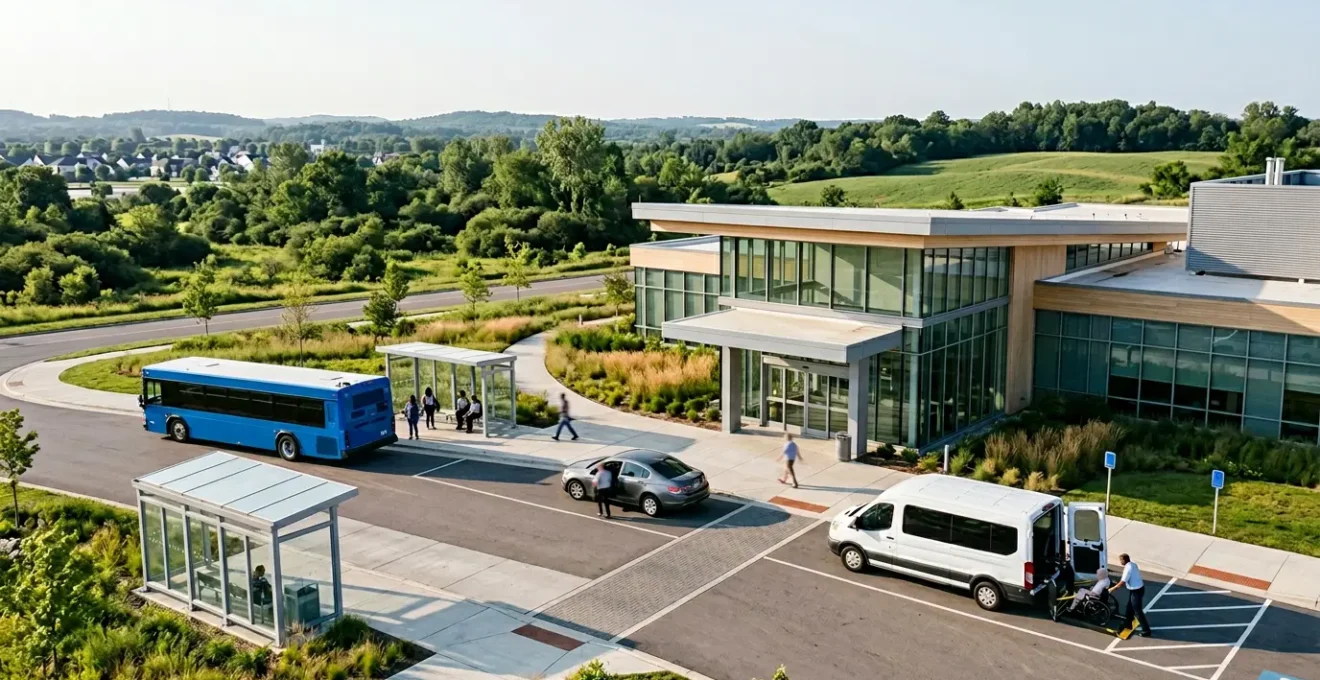
Fixing healthcare transportation requires more than just offering rides; it demands building an integrated ecosystem of access and trust.
- This involves leveraging existing community anchors like libraries and fire stations for telehealth and support.
- Success hinges on implementing zero-friction technology, like pre-configured cellular tablets, to bridge the digital divide for all patients.
Recommendation: Focus on weaving together multiple « braided funding » streams and deploying community health workers to create a resilient, patient-centric network that addresses the root causes of missed appointments.
As a community health planner, you’ve seen the frustrating outcome: a carefully scheduled appointment, crucial for a patient’s chronic condition management, results in a no-show. The reason isn’t neglect, but a transportation barrier—a missed bus, an unaffordable taxi, or the simple lack of a car in a community where distance is a tyrant. The ripple effects are costly, both in health outcomes and system inefficiencies. For years, the standard response has been to offer piecemeal solutions like public transit vouchers or a standalone mobile clinic, treating transportation as a simple logistical problem to be solved with a single intervention.
But these solutions, while well-intentioned, often fail to address the complex, interwoven challenges that carless patients face. They ignore the digital divide needed to use a ride-share app, the physical limitations that make a bus route impractical, and the deep-seated lack of trust that can make any new program feel intimidating. What if the fundamental approach is flawed? What if the solution isn’t a single program, but the architecture of a resilient, multi-layered ecosystem of access? This perspective shifts the goal from simply moving a patient from point A to point B, to building an integrated web of support that meets patients where they are.
This strategic guide moves beyond conventional tactics to provide a framework for designing such an ecosystem. We will explore the logistical and human-centered strategies needed to truly improve healthcare accessibility. From optimizing ride-share partnerships to reduce no-show rates and outfitting mobile clinics for maximum impact, to leveraging unconventional community hubs and designing programs that build lasting trust, you will gain a comprehensive blueprint for creating a system that is both innovative and profoundly empathetic.
This article provides a detailed roadmap for community health planners and non-profit directors. It outlines eight critical strategies for building a comprehensive transportation and access network for patients, ensuring that a lack of a car is no longer a barrier to care.
Summary: How to Improve Accessibility of Healthcare for Patients Without Cars?
- Why Uber Health Partnerships Reduce No-Show Rates by 15%?
- How to Outfit a Bus for Primary Care Visits in Rural Zones?
- Pharmacy Kiosks vs. Library Stations: Where Do Unconnected Patients Go?
- The Scheduling Habit That Ignores Public Bus Timetables
- Where to Find Grants for Non-Emergency Medical Transportation (NEMT)?
- How to Deploy Mobile Vaccination Vans to Remote Locations Efficiently?
- How to Pre-Configure Tablets so Patients Don’t Need Wi-Fi Passwords?
- How to Design Treatment Programs in Underserved Areas That Build Trust?
Why Uber Health Partnerships Reduce No-Show Rates by 15%?
The challenge of transportation in healthcare is staggering. Each year, an estimated 3.6 million people in the United States do not obtain medical care due to transportation issues. This directly translates into missed appointments, which disrupt care continuity and create significant administrative waste. While the 15% reduction in no-show rates often cited with ride-sharing partnerships is a powerful headline, the « why » is more nuanced than simply providing a free ride. It represents a fundamental shift from a passive to an active transportation solution.
Unlike a bus voucher, which still places the burden of scheduling, timing, and navigation on the patient, a coordinated ride-share program removes multiple points of friction. Platforms like Uber Health or Lyft Business allow healthcare coordinators to schedule rides on behalf of patients—including those without a smartphone or the app. This proactive approach ensures the vehicle arrives at the right time and goes to the right entrance, eliminating guesswork and reducing patient anxiety. The system provides reliability and predictability, two factors that are often missing from other forms of transport.
A prime example of this model in action is the partnership between Denver Health Medical Center and Lyft. By providing vulnerable patients with transportation services, they directly addressed a key social determinant of health. The success of such programs hinges on this integrated coordination. It’s not just a transaction; it’s a part of a logistically empathetic care plan. By removing the cognitive and logistical load from the patient, these partnerships do more than provide a ride—they provide peace of mind, making it significantly more likely the patient will arrive for their appointment.
How to Outfit a Bus for Primary Care Visits in Rural Zones?
For many rural communities, the challenge isn’t just lack of a car; it’s the sheer distance. On average, rural residents travel more than twice as far as their urban counterparts for healthcare, with one study showing an average of 17.8 miles for a medical visit. A mobile health unit, often a converted bus or large van, transforms this dynamic by bringing the clinic directly to the community. However, its effectiveness depends entirely on how it is outfitted—not just with medical equipment, but with patient experience in mind.
The interior design must serve a dual purpose: clinical functionality and creating a welcoming, private space. A successful mobile clinic typically includes a small, private examination room with a proper exam table, adequate lighting, and hand-washing facilities. It needs secure, well-organized storage for medical supplies, a refrigeration unit for vaccines and lab samples, and a reliable power source (generator or battery bank) to run equipment. Connectivity is also crucial, requiring a cellular hotspot or satellite internet to access electronic health records (EHR). The goal is to replicate the core functions of a primary care office in a compact, mobile footprint.
This diagram shows the potential layout and essential components of a well-designed mobile medical unit, emphasizing the balance between clinical efficiency and patient comfort.
Beyond the hardware, the design must consider patient flow and privacy. A small waiting area, even if it’s just a couple of comfortable chairs, and a sound-proofed consultation space are vital for building trust. The CalvertHealth Medical Center’s Mobile Health Center is a testament to this model’s success, providing essential primary and preventive care to residents facing transportation barriers. Outfitting a bus is less about filling it with equipment and more about designing a trusted healthcare destination on wheels.
Pharmacy Kiosks vs. Library Stations: Where Do Unconnected Patients Go?
For patients without reliable home internet or the digital literacy to navigate telehealth platforms, the digital divide is as formidable a barrier as a physical highway. The solution lies in creating an ecosystem of access by establishing telehealth and health information « stations » in places people already go and trust. These community trust nodes act as on-ramps to the healthcare system, leveraging existing infrastructure and social capital rather than trying to build it from scratch.
The choice of location is strategic, with each venue offering distinct advantages. Libraries, for instance, are neutral, safe spaces with established staff who can assist with technology. Fire stations offer 24/7 presence and are symbols of trust and emergency readiness. Even post offices and grocery stores can be integrated into this network, offering high foot traffic and regular points of contact for health screenings or information distribution. The key is to map the community’s existing social geography and partner with these anchor institutions.
This approach diversifies access points, ensuring that if one location is inconvenient, another may be suitable. The following table compares potential community access points, highlighting their unique strengths for different healthcare services.
| Location Type | Key Advantages | Best Suited For |
|---|---|---|
| Libraries | Neutral public space, computer access, regular hours | Telehealth sessions, health information access |
| Fire Stations | 24/7 presence, trusted personnel, emergency readiness | Basic health screenings, emergency transport coordination |
| Post Offices | Dense rural network, federal presence | Prescription delivery, health form assistance |
| Grocery Stores | High foot traffic, regular visits | Health kiosks, vaccination clinics |
Implementing this hub-and-spoke model requires a systematic approach. It’s about more than just placing a computer in a corner; it involves building partnerships, ensuring privacy, training local staff, and connecting these satellite locations to a central clinical hub for coordination.
Action Plan: Implementing a Hub-and-Spoke Telehealth Network
- Map Community Assets: Identify existing community trust networks and high-traffic locations (libraries, community centers, faith-based organizations) that are accessible to your target population.
- Forge Partnerships: Establish formal agreements with chosen community venues, clarifying roles, responsibilities, and the value proposition for their participation.
- Install Secure Technology: Deploy secure telehealth stations with robust privacy measures, such as soundproofing, privacy screens, and easy-to-clean hardware.
- Train Local Navigators: Train staff or volunteers at each location to assist patients with basic technology navigation and connection to the telehealth service, without providing medical advice.
- Establish a Coordination Hub: Connect all satellite locations to a central hospital or clinic coordination hub that manages scheduling, technical support, and clinical follow-up.
The Scheduling Habit That Ignores Public Bus Timetables
One of the most overlooked aspects of healthcare access is the fundamental mismatch between clinical scheduling practices and the realities of a patient’s life, especially for those reliant on public transportation. A clinic may schedule an appointment for 10:15 AM, a time that seems perfectly reasonable within the hospital’s workflow. However, for a patient using the bus, the only available routes may get them there at 9:30 AM or 10:45 AM. This forces a difficult choice: arrive 45 minutes early, potentially losing hours of unpaid work, or risk being late and having the appointment canceled.
This issue is a prime example of a lack of logistical empathy. The system is designed around the provider’s convenience, not the patient’s lived experience. For many, this isn’t a minor inconvenience; it’s a significant barrier. The financial cost of travel is a major factor, with one report finding that well over half of rural residents identified the expense of travel as a barrier. When every minute away from a job has a financial consequence, a poorly timed appointment can be a significant economic burden.
Solving this requires a shift in mindset and operations. Clinics can adopt « flex scheduling » for patients identified as having transportation challenges, offering appointment blocks (e.g., « please arrive between 10:00 and 10:30 ») rather than rigid times. Another approach is to co-locate appointments. If a patient needs to see a doctor and get lab work done, scheduling these back-to-back on the same day respects their time and minimizes their travel burden. Integrating public transit schedules into the clinic’s own scheduling software is a more advanced but powerful solution. It allows schedulers to see the patient’s transportation reality and proactively offer appointments that align with it. This demonstrates a deep respect for the patient’s time and effort, fostering the very trust the healthcare system needs to function.
Where to Find Grants for Non-Emergency Medical Transportation (NEMT)?
Building a robust transportation ecosystem is an investment. While the return on that investment—improved health outcomes, reduced no-shows, and greater equity—is immense, securing the initial and ongoing funding is a primary concern for any planner. The key to sustainability is not to rely on a single grant but to practice braided funding: weaving together multiple streams from federal, state, local, and private sources to create a resilient financial base.
A cornerstone of NEMT funding is the Federal Medicaid benefit, which mandates transportation for eligible beneficiaries to access Medicaid-covered services. Health planners must work closely with their state Medicaid agency to understand reimbursement protocols and provider enrollment requirements. Beyond Medicaid, numerous other avenues exist. The Federal Transit Administration’s (FTA) Section 5310 program offers funding specifically for enhancing the mobility of seniors and individuals with disabilities, which can be a perfect fit for purchasing or operating accessible vehicles.
Community and corporate partners are also vital. Local community foundations often have health access or equity-focused initiatives. Researching these through databases like the Foundation Center can uncover local allies. Furthermore, many corporations, particularly in the healthcare, insurance, and transportation sectors, have Environmental, Social, and Governance (ESG) programs that may support community health initiatives. A successful model is HealthTran in Missouri, which demonstrates how combining multiple funding streams can create a sustainable NEMT service in a rural area. Below are key funding sources to investigate:
- Federal Medicaid NEMT Benefit: The largest single source. Contact your state Medicaid agency for specific provider enrollment and reimbursement details.
- Community Foundation Grants: Research local foundations with a focus on health, equity, or community development.
- Corporate ESG Programs: Target healthcare systems, insurance companies, and transportation companies with a local presence for partnership or sponsorship.
- HRSA Rural Health Grants: Monitor grants.gov for specific funding opportunities related to rural health and transportation infrastructure from the Health Resources and Services Administration.
- United Way Local Chapters: Propose targeted community health transportation initiatives that align with their local priorities.
- FTA Section 5310 Program: Apply through your state’s Department of Transportation for funds to serve the elderly and individuals with disabilities.
How to Deploy Mobile Vaccination Vans to Remote Locations Efficiently?
Mobile vaccination vans are a powerful tool for proactive public health, but their efficiency hinges on strategic deployment. It’s not enough to simply have a van; it must go to the right places at the right times, overcoming the extreme logistical hurdles present in remote areas. The challenges are amplified, as evidenced by data showing that rural residents’ travel time after midnight to access healthcare can average 67 minutes, highlighting the vast distances and lack of 24/7 services.
Efficient deployment starts with data-driven route planning. This involves using geographic information system (GIS) mapping to overlay census data, patient addresses (anonymized), and data on « transportation deserts » to identify pockets of high need. The goal is to create routes that maximize patient encounters while minimizing travel time. This data-first approach should be paired with on-the-ground community intelligence. Partnering with local leaders—mayors, pastors, librarians—can provide invaluable insight into when and where the van will be most effective, such as setting up at a local farmers’ market on a Saturday or a high school football game on a Friday night.
Innovation in transportation models can also extend the reach of mobile services. While a van can cover roads, some locations remain exceptionally remote. The Angel Flight West model, while focused on a different need, offers a lesson in creative problem-solving. This network of volunteer pilots uses private aircraft to transport patients from remote areas to specialized care centers. For a health system, this principle of leveraging unconventional transportation assets could inspire partnerships with local aviation clubs or other volunteer transit groups to reach the most isolated populations, whether for vaccination or other critical services. Efficiency, in this context, is a blend of data science, community partnership, and creative logistical thinking.
How to Pre-Configure Tablets so Patients Don’t Need Wi-Fi Passwords?
Telehealth promises to bridge distances, but it often erects a new barrier in its place: the technology gap. Asking a senior patient, who may have limited technical experience or no home internet, to set up a new device, connect to Wi-Fi, download an app, and log in is a recipe for failure. The solution is zero-friction technology—devices that are pre-configured to work straight out of the box, requiring no technical skill from the patient.
The core of this approach is using cellular-enabled tablets. By procuring devices with built-in 4G/5G data plans, you completely eliminate the need for the patient to have or connect to a Wi-Fi network. The tablet is always connected, just like a cell phone. The next step is to use a Mobile Device Management (MDM) platform. This software allows your IT team to remotely configure and lock down the devices before they are ever shipped to a patient.
Using MDM, the tablet can be set to « kiosk mode, » which means it can only run a single, pre-approved application—your organization’s telehealth app. The interface is radically simplified, often to a single large button on the screen that says « Start Video Call. » All other functions are disabled. There are no settings to misconfigure, no other apps to get lost in, and no passwords to remember. The device is shipped directly to the patient with simple, pictorial instructions. This « zero-touch » deployment process transforms the tablet from a potentially intimidating piece of technology into a simple appliance for health, as easy to use as a telephone. It is the ultimate expression of logistical empathy in a digital format.
Key Takeaways
- True healthcare access is an ecosystem, not a single program. Success lies in integrating multiple layers of support, from ride-shares to mobile clinics.
- Leverage existing community trust nodes. Libraries, fire stations, and community centers are valuable, underutilized assets for deploying health services and technology.
- Logistical empathy is paramount. Designing systems around the patient’s reality—their schedules, budgets, and technical abilities—is the foundation of building trust and ensuring engagement.
How to Design Treatment Programs in Underserved Areas That Build Trust?
Ultimately, a fleet of vans, a network of telehealth kiosks, and a seamless ride-sharing program are just tools. Their effectiveness is determined by a single, invaluable currency: trust. In underserved areas, where residents may have experienced generations of systemic neglect or broken promises, trust is not a given. It must be earned, intentionally and consistently, through the very design of your treatment programs. This means shifting the focus from transactional encounters to relational support.
The most effective way to build this bridge of trust is by empowering people who are already part of the community’s fabric. This is the role of the Community Health Worker (CHW), who often acts as a cultural broker. As highlighted in a successful model, these care coordinators—who may be social workers, nurses, or trained local leaders—understand the nuances of their community. They know the transportation challenges, but they also know the facilitators: who runs the church van, which neighbor is willing to give a ride, and the best times to reach someone.
The Community Health Worker as a Cultural Broker
In one successful model, care coordinators, including social workers and nurses, are trained to serve as cultural brokers. They develop a deep understanding of both the transportation challenges their patients face and the available community-based facilitators. This allows them to provide multi-pronged approaches to overcome barriers, moving beyond simple referrals to deliver relationship-based support and skill-building interventions that empower patients in the long term.
Designing programs that build trust means integrating these CHWs into every layer of your access ecosystem. They are the human navigators for your telehealth stations, the friendly faces on your mobile clinic, and the reassuring voice on the phone confirming a scheduled ride. They provide the « warm handoff » that technology alone cannot. By investing in and empowering these individuals, you are not just addressing transportation barriers; you are rebuilding the connective tissue of community care and creating a system that is truly patient-centered.
The journey to equitable healthcare access begins with a single step. Start today by mapping your community’s assets—its trust nodes, its hidden transportation resources, and its potential community health workers—and begin architecting an ecosystem of care that leaves no one behind.