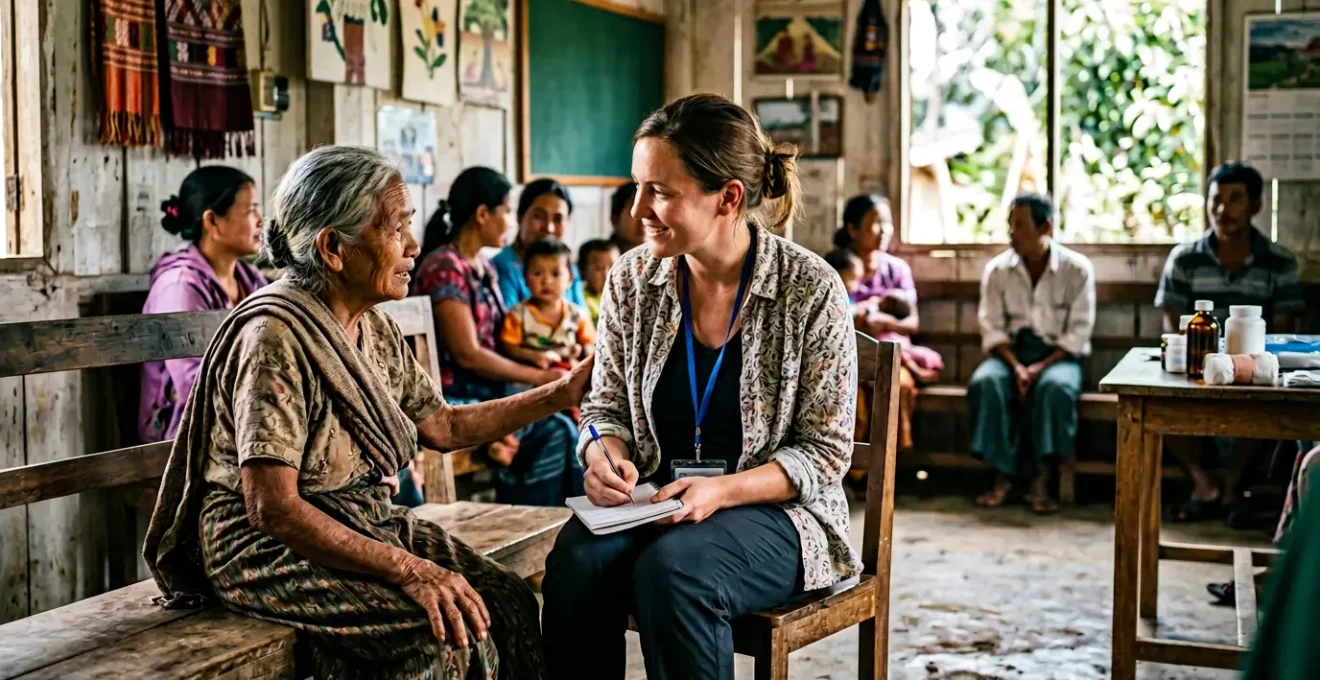
Building trust in underserved communities isn’t about having a « cultural sensitivity » checklist; it’s about systematically mapping and integrating into the community’s pre-existing social infrastructure.
- Effective outreach requires identifying the ‘ecosystem of trust’—the faith leaders, barbers, and community workers who are the true gatekeepers.
- Successful communication relies on ‘cultural transcreation,’ adapting the deep meaning and metaphors of medical advice, not just the words.
Recommendation: Prioritize hiring and empowering Community Health Workers (CHWs) as essential cultural navigators *before* deploying outside specialists to ensure program acceptance.
As a public health program manager, you’ve likely experienced the frustration. You launch a meticulously planned, evidence-based treatment program in an underserved area, complete with a significant budget and qualified staff. Yet, appointment no-show rates are high, engagement is low, and the intended health outcomes remain elusive. You followed the standard playbook: you translated the brochures, held a town hall meeting, and maybe even partnered with a local clinic. So, where did it go wrong?
The conventional approach to community health often operates on a flawed assumption—that trust is a commodity that can be built from scratch through programmatic actions. It views the community as a blank slate awaiting expert intervention. But what if the problem isn’t the program’s components, but its entire philosophy? What if, instead of trying to build new bridges of trust, the key is to find and honor the ones that already exist?
This is the anthropological perspective. It reframes the challenge entirely. The goal is not to impose a new system, but to understand and integrate within the community’s pre-existing ecosystem of trust. This ecosystem is the intricate, often invisible network of relationships, social hubs, and informal leaders that community members already rely on for support and guidance. It’s where credibility is forged and where health messages either gain traction or fade into irrelevance.
This guide will move you beyond the superficial checklist of cultural competence. We will explore how to see a community not as a target for an intervention, but as a complex social organism. By learning to identify its key trust brokers, decode its communication norms, and respect its established social scripts, you can design programs that are not just culturally sensitive, but culturally resonant and truly effective.
This article provides a strategic framework for program managers to adopt this anthropological lens. The following sections break down the critical elements of this approach, offering actionable insights to transform your programs from external interventions into trusted community assets.
Summary: How to Design Treatment Programs in Underserved Areas That Build Trust?
- Why Programs Fail Without the Endorsement of Local Faith Leaders?
- How to Translate Medical Instructions Beyond Just Google Translate?
- Barbershops vs. Churches: Which Venue is Better for Hypertension Screening?
- The « We Know Best » Attitude That Alienates Marginalized Patients
- When to Prioritize Hiring Community Health Workers Over Outside Specialists?
- Why Standard Government Messaging Fails in Specific Cultural Communities?
- Why Uber Health Partnerships Reduce No-Show Rates by 15%?
- How to Boost Vaccination Campaign Participation in Rural Areas by 25%?
Why Programs Fail Without the Endorsement of Local Faith Leaders?
Many public health initiatives are built on the bedrock of medical authority, yet they crumble when they meet the deeper foundations of community trust. In countless underserved areas, faith leaders are not just spiritual guides; they are primary counselors, social connectors, and de facto health advisors. A program that bypasses them is seen not just as an outsider initiative, but as one that disrespects the community’s core support structure. Their endorsement is a powerful signal that a program is safe, legitimate, and aligned with community values.
The impact of this collaboration is not merely anecdotal. A comprehensive review of partnerships between faith communities and mental health services found that these collaborations yield significant results. The analysis confirmed that 20 faith community partnerships showed promising findings for improving mental health symptoms, enhancing health literacy, and reducing stigma. These leaders act as powerful trust brokers, bridging the gap between clinical services and community members who might otherwise remain skeptical or isolated.
Engaging these leaders, however, requires more than a simple introductory meeting. It demands a genuine effort to understand their role and their congregation’s needs. Successful partnerships are built on mutual respect and a shared goal of well-being. This involves:
- Establishing trust by understanding the partner’s belief structures and their existing approaches to health.
- Tailoring health programs to match the specific interests, needs, and capacity of the faith community.
- Developing diverse communication strategies that resonate across different faith traditions and racial-ethnic backgrounds.
- Creating formal collaborative agreements between faith institutions and healthcare providers to ensure clear roles and responsibilities.
- Training faith leaders as certified health advocates through structured programs, empowering them with the tools to support their communities effectively.
Ultimately, neglecting faith leaders is akin to ignoring a city’s most vital piece of infrastructure. They are the conduits through which information flows and trust is maintained. Integrating them as true partners is a foundational step in creating a program that is welcomed, not just tolerated.
How to Translate Medical Instructions Beyond Just Google Translate?
One of the most common missteps in cross-cultural health communication is confusing translation with understanding. Handing a patient a brochure perfectly translated into their native language does not guarantee the message has been received. Words carry cultural baggage, and medical concepts are often intertwined with metaphors and assumptions that do not transfer directly. As the National Academy of Medicine notes, « Long-term trust grows when scientists and institutions are transparent, inclusive, and communicate clearly—especially how research is conducted and why it matters for health and well-being. » Literal translation is rarely enough to achieve this clarity.
The solution lies in moving from simple translation to the more nuanced process of cultural transcreation. This approach doesn’t just change the words; it recreates the message’s intent, context, and emotional resonance for a specific cultural audience. It asks: « What is the most effective way to convey this critical health concept to someone with this community’s lived experience and worldview? » This often involves using visual aids, local analogies, and community-vetted language.
As the image above illustrates, communication can transcend language. Using pictograms, storytelling, and simple visual aids helps ensure that concepts are understood regardless of literacy level or linguistic background. The difference between a traditional approach and transcreation is systemic, involving team composition, process, and output formats, as a comparative analysis from the National Academy of Medicine reveals.
| Aspect | Traditional Translation | Transcreation |
|---|---|---|
| Focus | Word-for-word accuracy | Cultural resonance and meaning |
| Team Composition | Single translator | Linguist + Medical expert + Community member |
| Metaphors | Literal translation | Locally relevant analogies |
| Testing Process | Grammar check | Back-translation + Community focus groups |
| Delivery Format | Written documents | Multiple formats: pictograms, audio, video |
Adopting a transcreation model signals a deep respect for the community. It shows that you are willing to do the work to meet them where they are, not just linguistically, but culturally. It is a foundational shift from disseminating information to fostering genuine understanding.
Barbershops vs. Churches: Which Venue is Better for Hypertension Screening?
The mantra « go where the people are » is sound advice, but it lacks strategic depth. The choice of venue is not just about foot traffic; it’s about understanding the venue’s social script—the unspoken rules, roles, and expectations that govern behavior in that space. A barbershop and a church may both be community hubs, but they operate on entirely different social scripts, making them suitable for different types of health interventions. Choosing the wrong one can undermine an entire program.
Barbershops, for example, have emerged as remarkably effective venues for men’s health screenings, particularly for hypertension among Black men. The reason is rooted in their social script: they are spaces of informal, trusted, peer-to-peer conversation. The « dwell time » is long, and the dialogue is relaxed. A landmark study demonstrated the power of this model, showing that a pharmacist-led intervention in barbershops resulted in an average 21.6 mm Hg reduction in systolic blood pressure among patrons. This success was not just about convenience; it was about leveraging a space where men already felt comfortable and trust was implicit.
Churches, on the other hand, operate on a script of moral authority and family-centric community. They are ideal for reaching a broader demographic, including women, children, and entire families. The messaging in a church can carry a weight of spiritual and communal responsibility. Therefore, the question isn’t whether a barbershop is « better » than a church, but which social script best aligns with the program’s specific goals and target audience. To make this strategic decision, program managers must become ethnographers of community spaces.
Your Venue Selection Audit: Points to Evaluate the ‘Social Script’
- Assess Dignity Factors: Does the venue feel mainstream and stigma-free? Barbershops succeed because they are a normal part of life, unlike a marked medical van which can signal illness or vulnerability.
- Evaluate ‘Dwell Time’: How long do people naturally spend there? Barbershops allow for long, informal conversations during a haircut, while a market stall might only offer a brief interaction.
- Consider Inclusivity: Who does this space naturally welcome? Barbershops excel for reaching men, whereas community centers or churches may be better for reaching families and women.
- Analyze Traffic Patterns: Is the flow of people consistent daily or concentrated weekly? Barbershops have a steady daily flow, while a church’s primary traffic is on the weekend.
- Analyze the Social Framework: What kind of trust operates here? Barbershops enable peer-to-peer trust, while churches offer a framework of moral authority. Align your messenger and message with this framework.
By consciously analyzing these elements, you move from simply picking a location to strategically selecting a platform where your health message has the greatest chance of being heard and trusted.
The « We Know Best » Attitude That Alienates Marginalized Patients
Perhaps the most corrosive barrier to trust is the implicit attitude of superiority that can permeate healthcare interactions. The « we know best » mindset, however well-intentioned, positions the healthcare provider as the sole expert and the patient as a passive recipient of care. This dynamic is particularly damaging in marginalized communities with a history of medical mistrust. It reinforces a power imbalance and communicates a profound lack of respect for the patient’s lived experience, cultural knowledge, and personal autonomy.
To dismantle this barrier, program managers must champion a culture of reverse immersion. This concept flips the traditional educational model on its head. Instead of professionals entering a community to teach, they enter it to learn. They become students of the community’s culture, its challenges, and its inherent strengths. This requires humility, active listening, and a genuine curiosity about a world outside the clinic walls. It is about recognizing that a community elder who knows which local herbs soothe a cough holds a form of expertise that is just as valid as a physician’s prescription.
This shift from a deficit-based model (what the community lacks) to an asset-based one (what the community possesses) is transformative. It changes the entire dynamic of engagement from a transaction to a partnership. When community members are seen as co-creators of health solutions, their participation is no longer a matter of compliance, but of ownership.
Case Study: Asset-Based Community Development in Practice
In various rural health initiatives, the principle of Asset-Based Community Development (ABCD) has proven highly effective. Instead of starting with a needs assessment (« what’s wrong here? »), the process begins by mapping community assets (« what’s strong here? »). This approach views community wisdom and scientific knowledge as tandem forces. By inviting community leaders and residents to the planning table from the very beginning, programs are shaped to be culturally acceptable and sustainable. This shared power and resource allocation demonstrates that the community’s participation is genuinely valued, which is the cornerstone of building lasting trust.
Adopting an asset-based approach is a conscious choice to cede some control. It means acknowledging that the best solutions often emerge from the community itself, and the role of the public health professional is to facilitate and support, not dictate.
When to Prioritize Hiring Community Health Workers Over Outside Specialists?
In program design, there is often a rush to deploy highly credentialed specialists, believing that expertise is the primary driver of success. However, in underserved communities, the most critical initial barrier is rarely a lack of clinical knowledge; it’s a lack of trust and access. This is where the strategic prioritization of Community Health Workers (CHWs) becomes paramount. CHWs are not just ancillary staff; they are the essential bridge between the formal healthcare system and the community it serves.
CHWs are effective because they are of the community. They share the same cultural background, speak the same language (and slang), and understand the subtle social cues that outside professionals often miss. They are the ultimate trust brokers. As frontline public health workers, CHWs bring a deep connection and rapport that enables patients to engage with health services because they trust the person guiding them. They can explain a diagnosis in a relatable way, help a patient navigate a complex appointment system, and address the social determinants of health—like food insecurity or transportation—that a specialist might overlook.
So, when should you prioritize them? The answer is simple: prioritize hiring CHWs when your primary program goals are trust-building, patient navigation, and initial engagement. They are the ‘soft entry’ specialist. Their role is to build the relational foundation upon which clinical expertise can later be effectively delivered. Integrating them is not about replacing specialists, but about creating a synergistic team where each role is valued.
- Deploy CHWs as the first point of contact for trust-building and patient navigation before a specialist is introduced.
- Establish paired mentorship systems where specialists teach clinical skills to CHWs, while CHWs teach cultural navigation skills to specialists.
- Ensure bidirectional learning is a core component of all team interactions, valuing the CHW’s community expertise as much as the specialist’s clinical knowledge.
- Use CHWs to provide basic healthcare services, health education, and advocacy, freeing up specialists to focus on complex cases.
- Create clear certification and career pathways for CHWs to advance into other roles within the healthcare system, recognizing their invaluable contribution.
Investing in CHWs first is an investment in the social infrastructure of your program. It ensures that when the specialist finally enters the room, the patient is not meeting a stranger, but a trusted partner recommended by someone they already know and respect.
Why Standard Government Messaging Fails in Specific Cultural Communities?
Standardized public health campaigns, often developed by government agencies, are designed for mass consumption. They rely on broad, impersonal channels and a one-size-fits-all message. While efficient on paper, this approach consistently fails in specific cultural communities for a fundamental reason: it lacks a trusted messenger and a resonant message. These campaigns speak *at* communities, not *with* them, and they arrive stripped of the cultural context and relational warmth that are prerequisites for trust.
In many communities, especially those with a history of systemic neglect or harm, a message from an official government source can be met with immediate skepticism. The messenger is perceived as an outside authority, not a trusted member of the community’s own ecosystem. The message itself, scrubbed of cultural nuance to be universally « inoffensive, » ends up being impersonal and sterile. It fails to connect with the values, fears, and hopes that truly drive behavior.
This sentiment is powerfully captured by Dr. Nguyen, a physician working with underserved communities, who stated in an interview with KQED Arts:
I could have all of this medicine and give it to people, but it’ll all go in the trash if people don’t trust me. Modern medicine’s flaws mean the people most impacted end up being… us.
– Dr. Nguyen, KQED Arts
This single statement crystallizes the issue: without trust, the most advanced medical interventions are worthless. So what is the alternative? As discussed in previous sections, the answer lies in leveraging the community’s existing trust infrastructure. For example, faith leaders have been shown to be effective messengers for sensitive topics like mental health. A report from the U.S. Department of Health and Human Services noted that nearly eighteen percent of clergy report discussing mental health concerns, providing a trusted, ongoing support system. The message succeeds because it is delivered by a known, respected figure within a familiar, safe context—the exact opposite of a generic government PSA.
Why Uber Health Partnerships Reduce No-Show Rates by 15%?
A high no-show rate is often interpreted by healthcare systems as a sign of patient apathy or non-compliance. In reality, it is frequently a symptom of logistical failure and hidden burdens, with transportation being one of the most significant. For many in underserved rural and urban areas, getting to an appointment can involve navigating unreliable public transit, securing childcare, and taking unpaid time off work. The barrier is not a lack of will, but a lack of practical means.
According to data on geographic variations in health coverage, rural children and adults under 65 were more likely to be uninsured than their urban counterparts, a disparity compounded by significant transportation challenges. Traditional solutions, like shuttle services, can be inefficient and sometimes carry a stigma, marking patients as being in need of assistance. This is why partnerships with ride-sharing services like Uber Health have proven so effective, reportedly reducing no-show rates by as much as 15%.
The success of this model is not just about providing a ride; it’s about providing a dignified and mainstream solution. Using a service like Uber is a normal, everyday activity for many. It removes the stigma of using a marked medical van and gives patients more control and flexibility over their schedule. It communicates respect for their time and their autonomy. By removing a major logistical and psychological barrier, the healthcare system shows it understands and is willing to address the real-world challenges its patients face.
Addressing transportation is a tangible way to build trust. It demonstrates that the program’s commitment to care extends beyond the clinic walls. To effectively reduce these barriers, programs should consider a multi-pronged approach:
- Be considerate of transportation-related barriers when scheduling appointments, offering flexibility.
- Factor in patients’ work schedules, especially for hourly workers who do not have paid time off.
- Partner with ride-sharing services to provide reliable, dignified, and mainstream transportation options.
- Implement integrated reminder systems that also confirm transportation arrangements, reducing uncertainty.
By treating transportation as an integral part of the care journey, programs can significantly improve access, reduce waste from missed appointments, and build a stronger, more trusting relationship with the communities they serve.
Key Takeaways
- Trust is not built from scratch; it is earned by identifying and integrating into a community’s existing social fabric and ‘ecosystem of trust.’
- Effective communication is ‘cultural transcreation’—recreating the deep meaning and emotional resonance of a message, not just translating words.
- Community Health Workers (CHWs) are not assistants; they are essential cultural navigators and trust brokers who should be prioritized for building initial engagement.
How to Boost Vaccination Campaign Participation in Rural Areas by 25%?
Boosting participation in a health initiative like a vaccination campaign by a significant margin is not the result of a single « silver bullet » solution. It is the culmination of applying the entire anthropological framework discussed throughout this guide. It requires a fundamental shift from a top-down, one-size-fits-all program to a portfolio of hyper-local, community-driven strategies that leverage the existing ecosystem of trust.
Reaching isolated communities demands bringing services directly to them in a way that feels natural and non-intrusive. Mobile health units and temporary health camps are a proven tactic for this. These programs are effective because they meet people where they are, both geographically and culturally. By setting up at familiar local hubs—like weekly markets, county fairs, or even major crossroads—they lower the barrier to access to almost zero. They transform healthcare from a destination you must travel to into a service that is part of your daily life.
The success of these initiatives hinges on their deep integration with the community. It’s not enough to simply show up. True engagement means co-creating the program with community members, recruiting them as decision-makers, and making the experience itself welcoming and supportive. This is where all the pieces of the puzzle come together: the endorsement of a faith leader, the clear, transcreated visual aids, and the welcoming presence of a familiar Community Health Worker.
To achieve a substantial boost in participation, consider this final checklist of community-centered strategies:
- Co-create programs with a diverse group of community members, empowering them as thought partners and decision-makers from day one.
- Network informally but intentionally at existing community events, meetings, and initiatives to build relationships as a trusted presence, not just a formal representative.
- Set up vaccination booths and screening stations at highly trafficked, non-medical locations like harvest festivals, county fairs, and general stores.
- Provide practical incentives that remove barriers, such as food, childcare, or activities for children during program events.
- Deploy small, agile mobile teams to hyper-local sites to reach even the most isolated individuals, demonstrating a commitment to leaving no one behind.
Ultimately, a 25% boost in participation is not an abstract target; it’s a reflection of a program that has successfully earned its place within the community’s ecosystem of trust.
The journey from being a program manager to a community health ethnographer begins with a single step: a commitment to see the community not as a problem to be solved, but as a partner rich with wisdom and assets. Start today by mapping the unique ‘ecosystem of trust’ in the community you serve. Identify the key people, places, and communication channels, and begin building a strategy grounded in respect and genuine partnership.