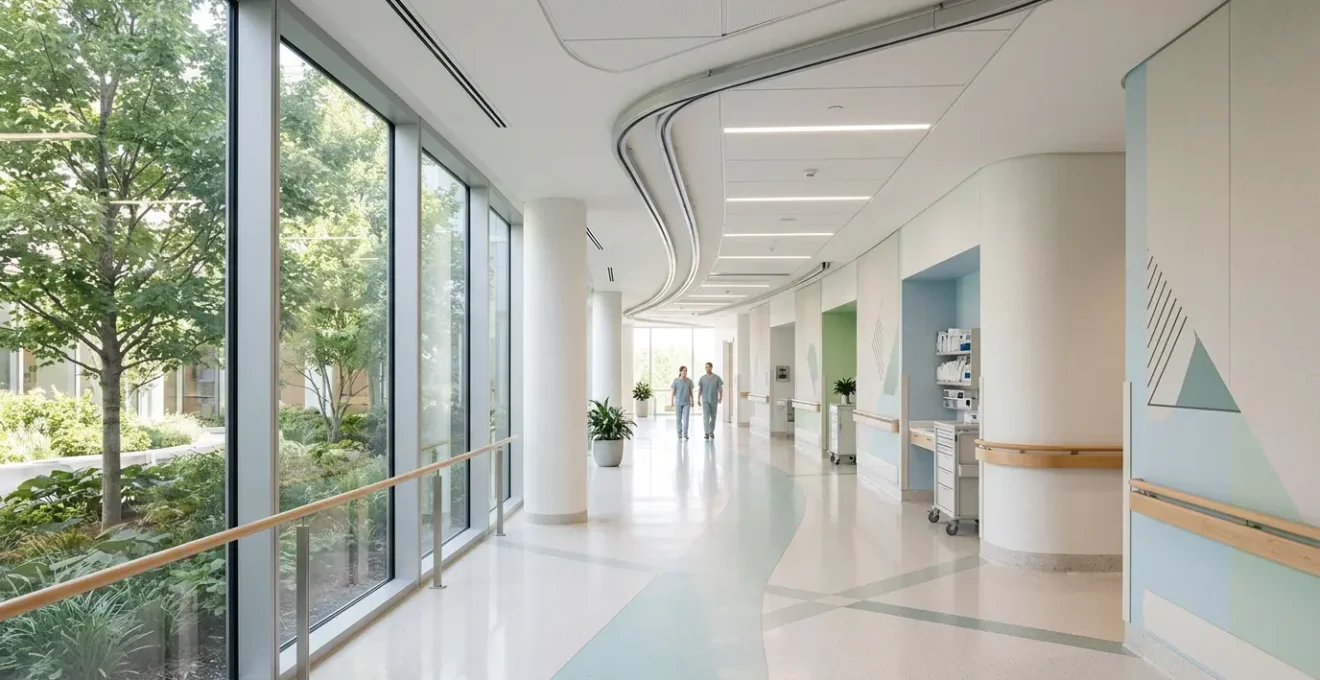
The persistent crisis of nurse injuries isn’t a training problem; it’s a design problem.
- Most injuries stem from high-risk patient handling and the cumulative strain of inefficient workflows—both are direct results of the physical environment.
- Strategic investments in architectural ergonomics, such as ceiling lifts and decentralized layouts, directly engineer out hazards and reduce musculoskeletal load.
Recommendation: Shift focus from reactive behavioral training to proactive, systemic prevention by making facility design the cornerstone of your occupational health and safety strategy.
The high rate of musculoskeletal disorders (MSDs) among nursing staff is a critical issue for every healthcare facility. For decades, the primary response has been focused on administrative controls: « safe patient handling » training, policies on team lifting, and reminders to « lift with your knees. » While well-intentioned, these measures place the burden of safety squarely on the individual nurse’s shoulders, asking them to perform perfectly in an imperfect, often hazardous, environment. This approach has yielded limited results because it fails to address the root cause of the problem: the physical space itself.
The constant need to navigate cluttered rooms with floor-based equipment, the repetitive strain from poorly designed charting stations, and the miles walked each shift hunting for supplies all contribute to a cumulative musculoskeletal load that no amount of training can fully mitigate. The fundamental flaw in our approach has been to treat this as a behavioral issue rather than an environmental one. What if the most effective way to protect our nursing staff isn’t to train them to navigate a dangerous environment, but to design an environment where the danger is engineered out from the start? This is the core principle of architectural ergonomics.
This article re-frames the conversation around nurse safety. We will move beyond individual technique and explore how strategic decisions in facility layout, equipment integration, and workflow optimization can create a systemically safer workplace. By focusing on engineered controls, we can reduce physical strain, minimize injury risk, and build a more resilient and effective clinical environment. We will analyze specific, evidence-based design interventions that target the most common sources of injury and inefficiency, providing a blueprint for a safer, more protective healthcare setting.
This guide delves into the specific architectural and ergonomic strategies that can fundamentally reduce workplace injuries for nursing staff. The following sections break down key areas where design choices have a direct and measurable impact on safety and efficiency.
Summary: A Guide to Reducing Nurse Injuries Through Ergonomic Facility Design
- Why Ceiling Lifts Are Superior to Floor Lifts in Small Patient Rooms?
- How to Layout Nursing Stations to Reduce Repetitive Strain from Charting?
- Electric vs. Manual Height Desks: Is the Investment Worth It for Ward Clerks?
- The Cable Management Oversight That Causes 15% of OR Falls
- Where to Place Supply Rooms to Reduce Daily Walking Distance by 1 Mile?
- The Layout Error That Increases Nurse Walking Time by 2 Miles per Shift
- Why Nurses Spend 20% of Their Shift Hunting for Equipment?
- How to Retrofit Medical Infrastructure for Pandemic Readiness Without Rebuilding?
Why Ceiling Lifts Are Superior to Floor Lifts in Small Patient Rooms?
Patient handling remains the single greatest source of acute and chronic injury for nurses, particularly to the lumbar spine and shoulders. While floor-based mobile lifts represent a step up from manual lifting, they introduce their own set of ergonomic challenges, especially in constrained patient rooms. Their large footprint requires significant clear floor space for operation and storage, which is often unavailable. This forces nurses into awkward postures to maneuver the lift around furniture, leading to new forms of physical strain.
Ceiling-mounted lift systems are a superior engineered control because they eliminate this floor-based friction. Integrated directly into the room’s structure, they are always available, require no manual positioning of a heavy base, and leave the floor clear for other essential activities. This design not only facilitates safer transfers but also improves compliance, as the reduced setup time removes a significant barrier to use. The data supports this shift; research shows facilities using ceiling lifts see a dramatic decrease in specific injury types, with a study highlighting a 48% reduction in lower back injuries and a 41% reduction in shoulder injuries among nursing staff.
Case Study: PeaceHealth Sacred Heart Medical Center
Between 2001 and 2003, PeaceHealth’s Sacred Heart Medical Center implemented a comprehensive safe-patient-handling program by installing ceiling lifts in 50 ICU and neurology rooms. The results, tracked over a five-year period, were significant. The facility documented a substantial reduction in work-related musculoskeletal disorders. Furthermore, an unintended benefit emerged: staff efficiency improved as nurses could remain at the bedside with patients while having supplies and transfer equipment readily accessible, demonstrating how ergonomic safety and operational performance are interlinked.
Action Plan: Key Strategies for Ceiling Lift Integration
- Analyze Workflow Paths: Install track layouts that directly facilitate the most common transfers, such as bed-to-chair and chair-to-bathroom, to minimize repositioning.
- Optimize Control Placement: Position lift controls so they are easily reachable from multiple standing positions around the bed and chair, preventing unnecessary stretching or awkward movements.
- Leverage Memory Presets: For bariatric rooms or patients with routine transfer needs, use memory presets for frequently needed lift heights and positions to increase speed and consistency.
- Enforce Clear Floor Policy: Ensure the benefits of the ceiling lift are maximized by creating and enforcing a policy to eliminate clutter and unnecessary floor-based equipment.
- Provide Point-of-Use Instructions: Attach clear, laminated, and graphical operating instructions directly to the lift device to ensure correct and safe use for all staff, including float pool or temporary personnel.
How to Layout Nursing Stations to Reduce Repetitive Strain from Charting?
While patient handling causes high-force injuries, the repetitive, low-grade strain from administrative tasks like charting is a significant, often underestimated, contributor to musculoskeletal disorders. Poorly designed nursing stations force staff into static, awkward postures for prolonged periods. This can involve craning the neck to see a monitor, perching on an ill-fitting stool, or repetitively reaching for a mouse and keyboard in an un-ergonomic position. The cumulative effect is substantial; an Ergotron survey reveals that 49% of nurses report feeling discomfort while inputting charting data, a clear indicator of systemic ergonomic failure.
The layout of the nursing station itself is a primary factor. The choice between a traditional centralized station and a modern decentralized model has profound ergonomic implications. A centralized station encourages collaboration but often increases walking distances and can become a bottleneck of noise and activity. Decentralized stations, or « pods, » place smaller charting areas closer to patient rooms. This design drastically reduces travel time and keeps nurses closer to their patients, but it requires careful planning to maintain team cohesion and ensure adequate supply access.
Ultimately, the goal is to create a workspace that promotes neutral postures and allows for variation. This includes providing adjustable chairs, mounting monitors at eye level on articulating arms, and ensuring adequate surface depth for keyboards and documents. By treating the nursing station as a critical ergonomic zone, facilities can mitigate the risks of repetitive strain injuries that plague a large portion of their clinical staff.
This comparative table from The Lawrence Group’s analysis of hospital design concepts highlights the key trade-offs between centralized and decentralized models, providing a framework for making informed design decisions based on a unit’s specific operational needs and safety goals.
| Feature | Centralized Station | Decentralized Stations |
|---|---|---|
| Staff Visibility | Limited to central area | Better visibility to patient rooms |
| Walking Distance | Longer distances to rooms | Reduced by strategic placement |
| Collaboration | Enhanced team interaction | May require more effort |
| Noise Levels | Higher concentration | Distributed throughout unit |
| Supply Access | Centralized storage | Point-of-use storage options |
Electric vs. Manual Height Desks: Is the Investment Worth It for Ward Clerks?
Ward clerks, unit secretaries, and other administrative staff are the logistical backbone of a clinical unit, yet their ergonomic needs are often overlooked. They spend the majority of their shifts at a desk, engaged in tasks that require intense focus and can lead to significant static postural load. Traditional fixed-height desks are a primary culprit, forcing individuals into a single, often compromised, posture for hours. While manually adjustable (crank) desks offer an alternative, their clunky operation often discourages frequent use. The investment in electric height-adjustable desks is a critical engineered control to combat this issue.
The key benefit of electric desks is the near-effortless ability to vary posture. The simple push of a button allows a user to transition between sitting and standing, which is crucial for preventing the negative physiological effects of prolonged static positions. This frequent postural change improves blood flow, reduces strain on the lower back, and can increase alertness and engagement. The data is clear: research demonstrates that electric desks lead to 3x more postural changes compared to manual crank-operated desks. This isn’t just a matter of comfort; it’s a preventative health measure that reduces the risk of long-term MSDs.
As you can see, a well-designed workstation incorporates not only an adjustable desk but also articulating monitor arms and proper seating. This creates a complete ergonomic ecosystem that adapts to the individual, rather than forcing the individual to adapt to the furniture. For roles that are inherently sedentary, providing the tools for dynamic movement is not a luxury but a fundamental component of occupational safety.
Sit-to-stand desks have been proven to enhance overall wellbeing and work performance.
– Xybix Healthcare Design Team, Healthcare & Hospital Desks Design Guide
The Cable Management Oversight That Causes 15% of OR Falls
In high-stakes environments like the Operating Room (OR), Emergency Department, or ICU, the floor is often a web of power cords, data cables, and tubing for medical gases and fluids. This « cable spaghetti » is more than just an unsightly mess; it’s a significant and often overlooked safety hazard. Cords snaking across walkways create a direct trip and fall risk for staff who are moving quickly and are often focused on the patient, not the floor. While the statistic that this causes 15% of OR falls highlights a critical risk, the problem extends beyond acute injuries.
Poor cable management also jeopardizes operational integrity. When a critical piece of equipment is unplugged accidentally by a snagged foot, it can compromise patient care and cause procedural delays. Furthermore, cables on the floor are more susceptible to damage from being rolled over by carts and beds, leading to equipment failure and costly repairs. Evidence shows that healthcare facilities with structured cable management systems saw a 30% reduction in device malfunction downtime. This demonstrates that managing cables is not just about tidiness; it’s about reliability and safety.
Effective solutions require a systemic, architectural approach. This includes using ceiling-mounted service booms and columns that deliver power, data, and medical gases directly to the point of use, eliminating floor-based cables entirely. For mobile equipment, implementing a strict policy of using retractable cord reels, cable protectors, and designated charging stations is essential. The goal is to create a « clear floor » policy not just for patient rooms, but for all clinical spaces. By treating cables as a managed utility rather than an afterthought, facilities can eliminate a persistent and dangerous class of hazards.
Where to Place Supply Rooms to Reduce Daily Walking Distance by 1 Mile?
A significant portion of a nurse’s physical exertion is not from lifting patients, but from walking. A nurse can walk several miles during a single shift, much of which is spent traveling back and forth to centralized supply rooms to retrieve items. This « workflow friction » is not just inefficient; it’s a major contributor to fatigue, which in turn increases the risk of errors and injuries. The traditional model of a single, large supply room per unit is a primary driver of this wasted motion. The solution lies in a decentralized supply strategy, often referred to as point-of-use storage.
As this image illustrates, point-of-use storage involves placing smaller, strategically located supply alcoves or cabinets near clusters of patient rooms. These hold the most frequently used items—such as linens, gloves, and basic wound care supplies—right where they are needed. This architectural decision can dramatically reduce walking distances, saving time and, more importantly, preserving the nurse’s physical energy for direct patient care tasks. It transforms the workflow from a series of long-distance retrievals to a more fluid, localized process.
This approach requires careful analysis of supply usage data to determine what to stock and where. The goal is not to eliminate the central supply room, which is still needed for bulk items and less frequently used equipment, but to supplement it with an intelligent, distributed network of resources. By designing storage into the workflow, facilities can reduce a major source of physical fatigue and improve overall operational efficiency.
Case Study: Massachusetts General Hospital Floor Optimization
In a strategic redesign of its patient floors, Massachusetts General Hospital moved away from the traditional « racetrack » layout. By ‘breaking’ the square floor plate, they were able to create more direct paths and embed decentralized nursing stations and supply areas closer to patients. This innovative layout significantly cut down on staff walking distances, which not only reduced fatigue but also improved patient visibility and the efficiency of care delivery, proving that thoughtful architecture is a powerful tool for process improvement.
The Layout Error That Increases Nurse Walking Time by 2 Miles per Shift
The choice of a hospital unit’s fundamental architectural layout is one of the most impactful decisions affecting nurse workflow and physical strain. A poorly chosen layout can permanently embed inefficiency and excessive walking into daily operations, leading to an increase of two or more miles walked per nurse, per shift. This is not just wasted time; it’s a significant ergonomic burden that contributes to end-of-shift fatigue and elevates the risk of injury.
The single-corridor layout, common in older facilities, is notoriously inefficient, creating the longest walking distances as nurses must traverse the entire length of the unit to move between rooms and central resources. The « racetrack » or « double-corridor » design improves on this by creating a circulation loop, but can still involve significant travel. Modern designs focus on reducing these distances through more compact and visible configurations. Radial or « pod » designs, where patient rooms are arranged around a central nursing station, offer some of the shortest paths and excellent patient visibility. An even more advanced concept is the open core design, which centralizes support services and creates clear, direct sightlines and access routes to all rooms.
This analysis from the DLR Group’s healthcare design team clearly shows how different layouts perform across key metrics. The data provides a powerful argument for prioritizing designs that minimize walking distance as a core safety and efficiency strategy.
| Layout Type | Walking Distance | Patient Visibility | Efficiency Score |
|---|---|---|---|
| Radial/Pod Design | Shortest paths | Excellent from center | High |
| Racetrack | Moderate | Good circulation | Moderate-High |
| Single Corridor | Longest distances | Limited visibility | Low |
| Open Core | Reduced by 40% | 360-degree views | Very High |
Choosing a layout that minimizes travel is a powerful engineered control. It conserves nurses’ energy, keeps them closer to patients, and reduces the cumulative physical load that contributes to MSDs. When designing new facilities or undertaking major renovations, the selection of the core layout should be treated as a primary occupational health and safety decision.
Why Nurses Spend 20% of Their Shift Hunting for Equipment?
One of the most frustrating and inefficient parts of a nurse’s day is the « hunt » for mobile medical equipment like IV pumps, bladder scanners, and wheelchairs. Studies have shown that nurses can spend up to 20% of their shift—over an hour and a half—simply searching for the tools they need to do their jobs. This is a massive drain on productivity and a significant source of physical and mental fatigue. The problem stems from a lack of system-wide asset management, where equipment is hoarded in rooms, left in hallways, or misplaced in decentralized storage closets without a clear « home. »
This constant searching adds to the cumulative physical burden on nurses. It increases their daily walking distance and often involves bending and reaching to look behind other items. This fatigue is a direct contributor to the high rate of musculoskeletal disorders. The Bureau of Labor Statistics data shows MSDs occur at a rate of 46.0 cases per 10,000 full-time workers among registered nurses, a rate higher than that of many physically demanding construction trades. Reducing the « hunt » is a key leverage point for mitigating this risk.
The most effective engineered control for this problem is the implementation of a Real-Time Location System (RTLS). By placing small tracking tags on each piece of mobile equipment, staff can instantly locate any item using a computer or mobile device. This eliminates search time, reduces frustration, and allows nurses to focus on patient care. RTLS also provides valuable data on equipment utilization, helping to optimize inventory levels and prevent unnecessary capital expenditures on « missing » equipment. Combining RTLS with designated, clearly-labeled parking or storage areas for all mobile equipment creates a closed-loop system that ensures the right tool is in the right place, at the right time.
Key Takeaways
- The physical design of a healthcare facility is a primary determinant of nurse safety and a more powerful intervention than behavioral training alone.
- Engineered controls like ceiling lifts, decentralized layouts, and RTLS directly remove hazards and reduce musculoskeletal load from daily workflows.
- Investing in architectural ergonomics is an investment in staff retention, operational efficiency, and a culture of safety.
How to Retrofit Medical Infrastructure for Pandemic Readiness Without Rebuilding?
The lessons from recent pandemics have underscored the need for healthcare facilities to be agile and adaptable. The ability to rapidly scale up ICU capacity or create isolated triage zones is no longer a hypothetical need but a core operational requirement. For existing facilities, the challenge is to achieve this flexibility without undertaking a complete and cost-prohibitive rebuild. The solution lies in strategic retrofitting, focusing on creating multi-purpose spaces and pre-installing the necessary infrastructure for rapid conversion.
A key strategy is to design spaces with inherent flexibility. This means creating patient rooms that can be easily escalated from a standard medical/surgical level to an ICU level of care. This involves pre-installing infrastructure like additional medical gas outlets (oxygen, air, vacuum), robust electrical systems to handle more equipment, and the structural support for ceiling-mounted booms or lifts. Modular components are critical to this approach. Using prefabricated, interchangeable headwalls and even modular bathroom pods allows for rapid changes in room acuity with minimal disruption.
Case Study: Atrium Healthcare’s Flexible Bed Tower Design
Atrium Healthcare’s Pineville facility provides a powerful model for adaptable infrastructure. Their new bed towers utilize an open core concept with patient rooms designed for scalability. Each room has the built-in capacity to escalate to ICU-level care, complete with flexible cabling and integrated telehealth infrastructure. This forward-thinking design, which is being replicated across five new projects, allows the health system to add 1,000 beds that can dynamically respond to shifts in patient acuity, whether from a pandemic surge or other mass casualty events.
Beyond individual rooms, corridors and even non-clinical areas near emergency departments can be designed for surge capacity. By pre-installing utility hookups in the walls of wide corridors or in conference rooms, these spaces can be quickly converted into temporary treatment bays. This kind of planning transforms static infrastructure into a dynamic asset, providing the resilience needed to face future public health crises.
- Design flexible spaces that can adapt from medical surgery to ICU rooms.
- Install infrastructure for quick conversion including medical gas systems.
- Create corridors near emergency departments for surge triage events.
- Implement modular headwalls and prefabricated bathroom pods.
- Plan for conversion of non-clinical areas with pre-installed utility hookups.
To truly build a culture of safety, occupational health officers must champion this shift in perspective. Moving from a focus on individual behavior to one on systemic, environmental design is the most effective and sustainable path to reducing nurse injuries. By collaborating with facility planners and architects to implement these engineered controls, you can create a workplace that protects its most valuable asset: its clinical staff. Begin today by initiating an ergonomic audit of your highest-risk unit to identify the most impactful design interventions.