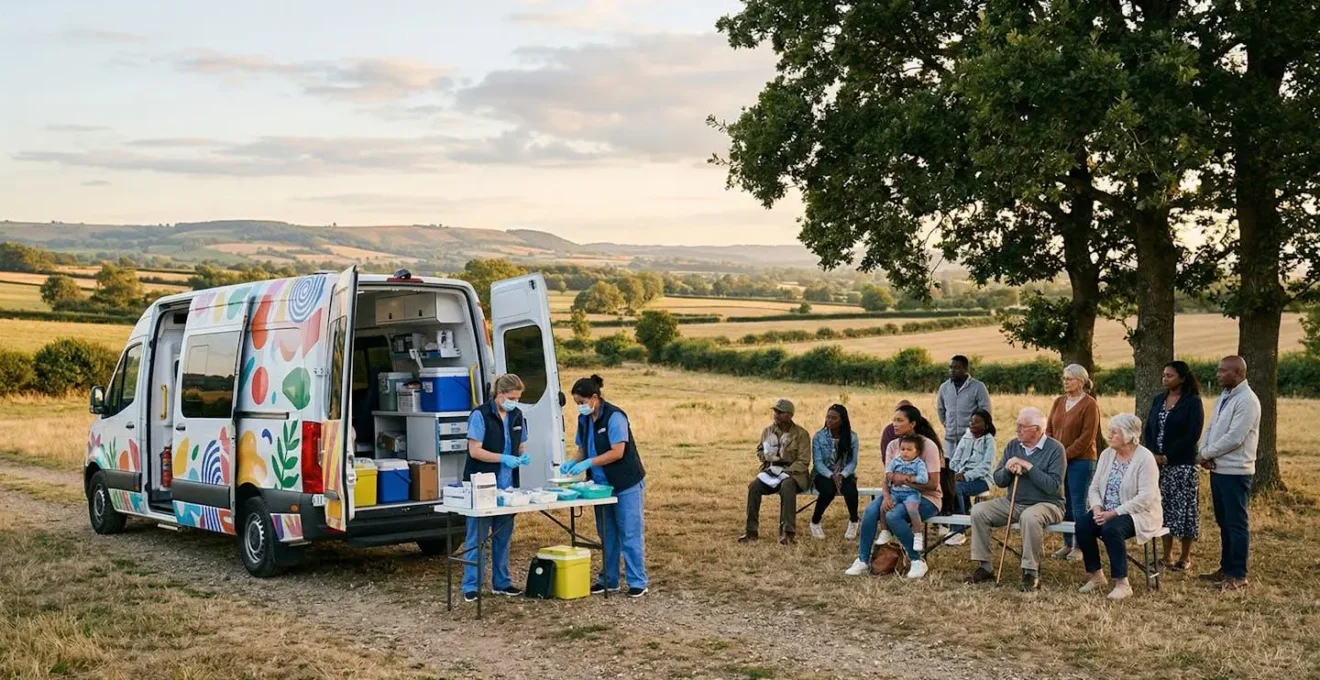
Achieving significant gains in rural vaccination requires shifting from mass communication to building a localized « trust infrastructure. »
- Generic government messages often fail because they don’t align with specific cultural values and lived experiences.
- Logistical empathy—deploying mobile units and managing the cold chain with precision—is as crucial as the message itself.
Recommendation: Focus on co-designing programs with existing community networks and using hyper-targeted channels like local radio to deliver resonant, trust-based messaging.
For public health officials, the gap in vaccination rates between urban and rural populations remains a persistent and frustrating challenge. Despite widespread information campaigns, significant pockets of hesitancy and logistical barriers continue to hinder progress in underserved areas. The conventional approach, often relying on broad public service announcements and informational pamphlets, frequently fails to move the needle, leaving coordinators wondering what they are missing.
The common advice is to « educate more, » « combat misinformation, » or « improve access. » While well-intentioned, these platitudes overlook the core of the issue. The problem isn’t necessarily a lack of information, but a deficit in trust and resonance. The key to unlocking higher participation isn’t simply about broadcasting health facts louder; it’s about fundamentally rethinking the entire engagement strategy.
What if the solution lay not in marketing, but in a form of sociological and logistical science? This guide proposes a new framework, one centered on building a robust trust infrastructure and practicing logistical empathy. We will explore how to dismantle specific, localized barriers by treating community engagement as a system to be designed, not just a message to be delivered.
This article will provide a strategic blueprint, moving from an analysis of messaging failures to the practicalities of mobile clinic deployment, cold chain integrity, and trust-building program design. It offers actionable strategies for public health professionals to create vaccination campaigns that are not only seen and heard, but are also felt and trusted by the communities they serve.
Summary: A Strategic Blueprint for Increasing Rural Vaccination Uptake
- Why Standard Government Messaging Fails in Specific Cultural Communities?
- How to Deploy Mobile Vaccination Vans to Remote Locations Efficiently?
- Social Media vs. Local Radio: Which Channel Best Reaches Seniors for Booster Shots?
- The Cold Chain Error That Spoils 15% of Vaccines in Transit
- How to Reduce No-Show Rates for Second Doses Using SMS Reminders?
- How to Outfit a Bus for Primary Care Visits in Rural Zones?
- The Scare Tactic Mistake That Makes People Ignore Hygiene Warnings
- How to Design Treatment Programs in Underserved Areas That Build Trust?
Why Standard Government Messaging Fails in Specific Cultural Communities?
One of the most significant hurdles in public health is the assumption that a single, standardized message will be effective for all populations. This is particularly untrue in rural areas, where community identity and cultural values can differ vastly from urban centers. In fact, research has shown the gap in COVID-19 vaccination coverage between urban and rural areas more than doubled between April 2021 and January 2022, highlighting a clear disconnect. This isn’t a failure of the information itself, but a failure of connection—a phenomenon we can call communication friction.
Standard government messaging often originates from a centralized authority and is designed for mass consumption. It prioritizes scientific accuracy and a formal tone, which can be perceived as cold, impersonal, or even condescending by communities with a strong sense of local identity and skepticism towards outside institutions. The message lacks what is arguably the most critical component: message resonance. It doesn’t speak the local language, reflect shared values, or acknowledge the specific concerns and lived realities of the community.
A successful alternative is to embed messaging within the existing community fabric. For example, the campaign in Russell County, Alabama, demonstrates this perfectly. Instead of a generic government slogan, they developed three culturally-aligned messages: « Vaccines are Safe, Vaccines Save Lives, and Vaccines Save Money. » By partnering with local churches and engaging EMTs who were already trusted community members, they built on a pre-existing trust infrastructure. This approach doesn’t just transmit information; it validates it through trusted local channels, dramatically reducing communication friction and increasing uptake.
How to Deploy Mobile Vaccination Vans to Remote Locations Efficiently?
Addressing the physical barriers to healthcare is a cornerstone of any rural outreach strategy, and mobile vaccination vans are a powerful tool. However, their effectiveness hinges on more than just their existence. Efficient deployment requires a strategy rooted in logistical empathy—a deep, data-informed understanding of a community’s daily life, travel patterns, and practical constraints. Simply parking a van in a town center and waiting for people to arrive is a recipe for low turnout.
An efficient deployment strategy begins with community mapping. This involves identifying not just population density, but also key community hubs: grocery stores, post offices, places of worship, and community centers. Scheduling should align with the community’s rhythm. For instance, positioning a van near a farmer’s market on a Saturday morning or outside a major local employer during a shift change can dramatically increase accessibility. The goal is to integrate the vaccination opportunity seamlessly into people’s existing routines, not to create a new, inconvenient errand.
Furthermore, the deployment must be preceded by effective, hyper-local communication. This means partnering with local leaders to announce the van’s arrival and purpose through trusted channels like community newsletters, local radio, or even flyers in the general store. The van itself should be designed to be welcoming and non-threatening, transforming a medical procedure into a positive community event. This holistic approach turns a simple vehicle into a vital piece of public health infrastructure.
As this image illustrates, the mobile unit becomes a hub of activity and service, bringing healthcare directly to where people live and gather. The focus is on approachability and convenience, dismantling the barrier of distance that so often defines rural healthcare access. True efficiency is measured not in miles driven, but in the number of meaningful, trust-building interactions facilitated.
Social Media vs. Local Radio: Which Channel Best Reaches Seniors for Booster Shots?
When targeting seniors in rural areas for booster shots, the choice of communication channel is critical. While social media seems ubiquitous, its effectiveness with this demographic can be overestimated, especially in areas with limited internet access or lower digital literacy. In contrast, local radio often remains a highly trusted and pervasive medium. Choosing the right channel requires a nuanced understanding of reach, trust, and the specific action required.
Social media can be a powerful tool, but its best use may be indirect. A « grandchild-as-influencer » strategy, where campaigns target younger family members and equip them to help their grandparents book appointments, can be effective. This leverages existing family trust networks. Direct advertising to seniors on platforms like Facebook can work, but it requires careful targeting and a message that feels authentic. As a study published in PubMed notes, one successful digital campaign involved video interviews with local nurses sharing their personal stories, using the health belief model to frame the conversation. This approach personalizes the message and uses familiar faces to build credibility.
However, for building broad-based trust and disseminating information widely, local radio often has an edge. It is a constant companion in many rural households and vehicles, and local on-air personalities are often seen as trusted community figures. A live Q&A show with a local doctor can demystify complex information and address concerns in real-time, in a way that a static social media post cannot. The following table breaks down the strategic advantages of different channels.
This comparative analysis, based on a recent study on communication channel effectiveness, clarifies the distinct roles each medium can play.
| Channel | Reach Rate | Trust Level | Best Use Case |
|---|---|---|---|
| Local Radio | High (75%+) | Very High | Building trust through Q&A shows with local doctors |
| Social Media (targeting family) | Moderate (40-50%) | Moderate | Grandchild-as-influencer strategy for appointment booking |
| Community PA Systems | High (80%+) | High | Hyperlocal announcements at markets and places of worship |
| Audio QR Posters | Low-Moderate (20-30%) | Moderate | Providing reassuring messages from local leaders |
As the data shows, a multi-channel approach is often best, using radio for broad trust-building and social media for targeted, action-oriented prompts through family networks.
The campaign consisted of digital advertisements and video interviews with nurses from rural areas. Interview questions were developed using knowledge of the health belief model and allowed the nurses to share their COVID-19 stories.
– Lambooij et al., PubMed – Increasing COVID-19 Immunization Awareness in Rural Communities
The Cold Chain Error That Spoils 15% of Vaccines in Transit
Beyond messaging and access, a successful vaccination campaign is a feat of logistics. One of the most critical and fragile components is the cold chain—the temperature-controlled supply chain required to keep vaccines viable from the manufacturer to the patient’s arm. A single error can lead to widespread spoilage, wasted resources, and cancelled appointments, severely undermining public trust. This is not just a technical problem; it’s a systemic failure point that is exacerbated in rural areas where distances are greater and infrastructure can be less reliable.
The challenge is compounded by the fact that, according to the National Rural Health Association, about two-thirds of health professional shortage areas are located in rural communities. This means fewer trained personnel are available to manage complex logistical tasks, increasing the risk of human error. Common failure points include improperly calibrated refrigerators, prolonged exposure during transport between facilities, or simple breakdowns in protocol during staff shift changes. Blaming individuals is counterproductive; the solution lies in designing a more resilient system.
As this image suggests, maintaining the cold chain requires meticulous attention to detail at every stage. Building a robust system involves implementing redundant checks, clear protocols, and a culture of proactive problem-solving. It’s about making the right way the easiest way, reducing the cognitive load on overworked staff and creating multiple safeguards against failure.
Action Plan: Fortifying Your Cold Chain Management
- Implement mandatory digital checklists at every transfer point with gamification elements to encourage compliance.
- Use redundant low-tech temperature-sensitive strips alongside high-tech sensors for a fail-safe approach.
- Conduct a root cause analysis using the « 5 Whys » framework for any cold chain failure to identify systemic issues.
- Create visual « if-this-then-that » protocols that are clear and accessible for staff at all education levels.
- Focus on improving systemic issues like shift change protocols and equipment maintenance schedules rather than assigning individual blame.
How to Reduce No-Show Rates for Second Doses Using SMS Reminders?
Securing the first dose is only half the battle. A significant challenge in any multi-dose vaccination series is the drop-off rate for subsequent appointments. In rural communities, where travel can be time-consuming and costly, reducing no-show rates for second doses is paramount to achieving full immunization. While many factors contribute to this issue, one of the most effective and low-cost interventions is the strategic use of personalized SMS reminders.
The power of SMS lies in its directness and simplicity. Unlike emails that may go unread or flyers that get lost, a text message arrives directly on a personal device that people carry with them. However, effectiveness is not guaranteed by the medium alone; it depends heavily on the content and timing of the message. A generic, robotic reminder is easily ignored. An effective reminder system is built on principles of behavioral science.
First, personalization is key. Using the patient’s name creates an immediate sense of recognition. Second, the message should do more than just state the date and time; it should reduce the cognitive load for the patient. Including the clinic address with a map link, confirming the specific vaccine they are due for, and providing a simple way to confirm or reschedule (e.g., « Reply YES to confirm ») empowers the patient and makes follow-through easier. A recent study found a 38% increase in vaccination rate among elderly patients who received such personalized reminders. This data powerfully demonstrates that a simple, well-crafted message can have a massive impact on public health outcomes by making it easy for people to follow through on their intentions.
How to Outfit a Bus for Primary Care Visits in Rural Zones?
A mobile health unit is more than just a vehicle; it is a clinical environment on wheels. Outfitting a bus for primary care visits in rural zones requires a design philosophy that prioritizes not only medical functionality but also patient comfort and psychological safety. The goal is to create a space that reduces the inherent anxiety associated with medical visits and builds trust from the moment a person steps aboard. This is a critical aspect of logistical empathy.
The interior design should deliberately move away from a sterile, clinical aesthetic. Installing warm, non-clinical lighting can immediately make the space feel more welcoming and less intimidating. Another crucial feature is the creation of soundproofed spaces for private consultations. In a small community, fear of being overheard can be a major deterrent to seeking care, so guaranteeing privacy is essential for building trust. Patient comfort can be further enhanced by including a small but comfortable waiting area, ideally with amenities like phone charging stations, which show a thoughtful consideration for the patient’s time and needs.
From a functional standpoint, flexibility is paramount. A well-outfitted bus uses modular interior components that can be reconfigured for different missions—one day it might be focused on vaccinations, the next on primary care check-ups or health screenings. The Steuben County mobile vaccination van in New York serves as an excellent case study. Originally a food truck, it was converted to provide a range of immunizations and also carries Narcan, demonstrating its adaptability to pressing local health needs. To operate effectively in remote areas, the bus must be equipped with satellite internet and offline EMR capabilities, ensuring data continuity even in zones with no connectivity. A tablet-based registration system can also streamline intake and reduce wait times, further improving the patient experience.
The Scare Tactic Mistake That Makes People Ignore Hygiene Warnings
In public health, there’s a tempting but dangerous assumption that fear is an effective motivator. Campaigns that rely on graphic images or alarming statistics—so-called « scare tactics »—are often deployed with the hope of shocking people into compliance. However, particularly in communities where trust in authorities is already low, this approach can spectacularly backfire. Instead of encouraging action, it can trigger psychological defense mechanisms, leading people to disengage from or even reject the message entirely.
The psychological principle at play is often a form of cognitive dissonance or reactance. When a message induces high levels of fear without providing an equally high sense of self-efficacy (the belief that one can perform the recommended action), people feel helpless and anxious. To resolve this discomfort, they may choose to discredit the source, downplay the risk, or simply ignore the warning. This explains a baffling phenomenon observed during the COVID-19 pandemic: survey data revealed that 76% of rural adults knew someone who had the disease, yet for the majority, this personal proximity to the risk did not change their intent to get vaccinated.
This shows that personal experience with a threat is not enough to drive action when the underlying trust infrastructure is weak. Scare tactics delivered by a distrusted source are interpreted not as a helpful warning, but as an attempt at manipulation or control. Effective messaging, therefore, must pair risk information with empowerment. The focus should be on clear, simple, actionable steps that people can take to protect themselves and their families. The tone should be supportive and empathetic, not alarmist. By empowering people instead of frightening them, you build agency and trust, which are far more durable motivators than fear.
Key Takeaways
- Stop Broadcasting, Start Resonating: Tailor messages to specific cultural values and deliver them through trusted local figures, not just generic health facts from a central authority.
- Treat Access as a Science: Deploy mobile units with logistical empathy that aligns with community rhythms and safeguard the cold chain as a critical systemic process, not an afterthought.
- Build a Trust Infrastructure: True, lasting engagement comes from co-designing programs with established community networks and empowering residents, not from top-down directives.
How to Design Treatment Programs in Underserved Areas That Build Trust?
Ultimately, boosting vaccination rates and improving health outcomes in underserved areas is not a transactional process; it is a relational one. Trust is the currency of public health, and it cannot be manufactured with a clever slogan or a single outreach event. It must be earned slowly and deliberately by designing programs that are not just *for* the community, but *with* the community. This requires a fundamental shift from a top-down, service-delivery model to a collaborative, partnership-based approach.
Building a trust infrastructure means identifying, respecting, and integrating the existing social fabric of a community. The Pickens County Community Action initiative in Alabama is a powerful blueprint for this strategy. Instead of creating a new program from scratch, they partnered with over 30 existing community organizations, including the NAACP, the Black Belt Community Foundation, and local hospitals. They established faith-based and disability services advisory committees, ensuring that the program was guided by the voices and needs of the people it intended to serve. This act of ceding control is a powerful demonstration of respect that builds immediate credibility.
Furthermore, the program addressed practical barriers that signal a genuine understanding of people’s lives. They sponsored transportation to vaccine clinics and partnered with local physicians for personalized counseling, acknowledging that access is about more than just a clinic’s existence. This approach recognizes that trust is built on a foundation of reliability, consistency, and demonstrated care. It is a long-term investment that pays dividends far beyond a single campaign, creating a resilient foundation for all future public health initiatives. In a context where there was a 4-5% drop in vaccination rates among vulnerable children during the pandemic, rebuilding this trust is not just important—it is urgent.
Begin implementing these trust-centered strategies today to build healthier, more resilient rural communities that are empowered to protect their own well-being.